
The Catalog That Nobody Asked For (But Everyone Needs to Pay Attention To)
Late last year, CISA’s Known Exploited Vulnerabilities catalog crossed a threshold that deserves more than a news cycle. It hit 1,200 entries. For those working in federal agencies or contractors serving them, this number carries real weight. Under BOD 22-01, your organization has 15 days to remediate any vulnerability flagged as critical severity in that catalog. Fifteen days. Not weeks. Not a quarter. Fifteen days.
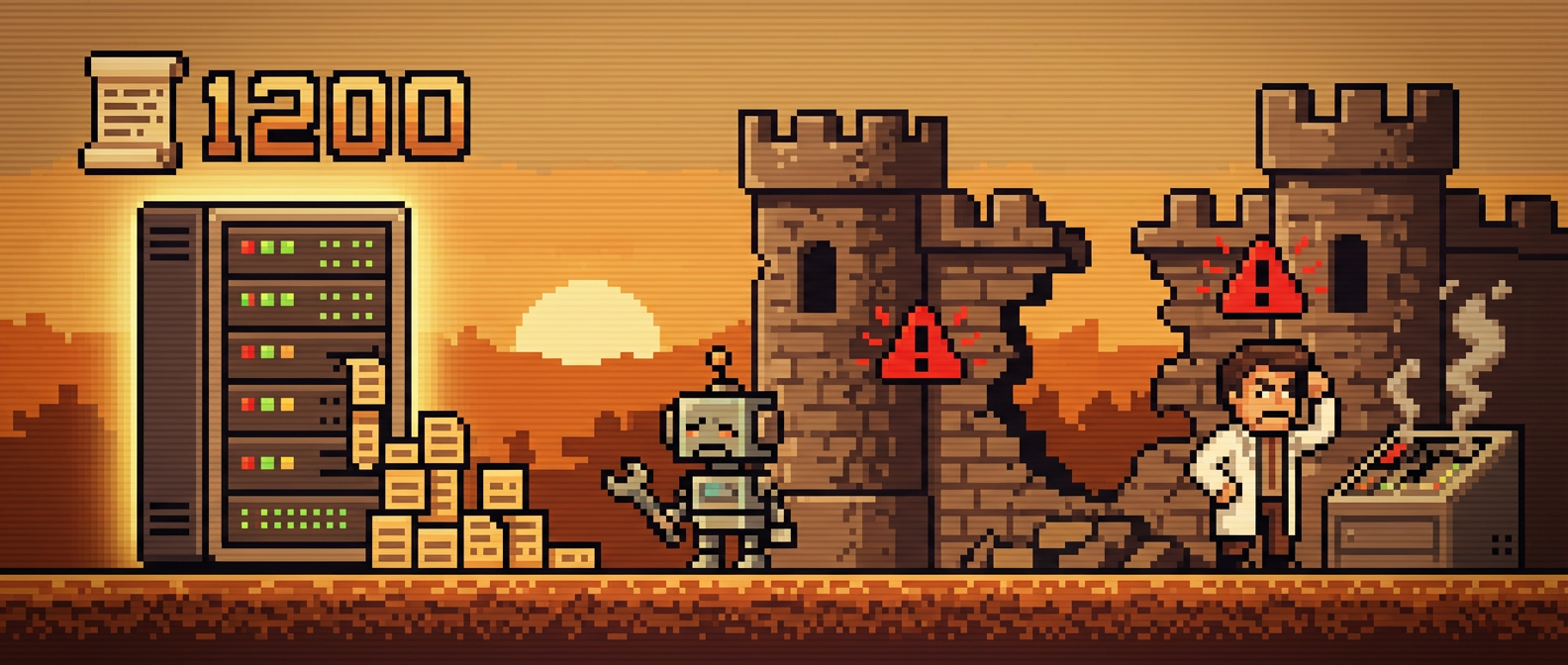
The milestone isn’t really about the number itself. It’s about what the number represents: a curated, constantly updated list of vulnerabilities that adversaries are actively exploiting right now. This isn’t theoretical security theater. This is what’s actually happening on networks today. And if you’re still running patch management the way you did five years ago, you’ve got a process designed for a threat landscape that no longer exists.

The Velocity Problem Nobody Talks About
Let me walk you through the arithmetic that should keep you awake at night. In 2021, it took researchers a median of 32 days to exploit a newly published CVE. That gave you a reasonable window. Not comfortable, but reasonable. By 2024, according to the Verizon 2025 Data Breach Investigations Report, that number had collapsed to 5 days. Five days from public disclosure to active exploitation.
Meanwhile, the volume problem is stacking on top of the velocity problem. The National Vulnerability Database processed over 40,000 new CVEs in 2024 alone, a 38 percent increase from just two years earlier. That’s not a gradual climb. That’s exponential noise flooding into your triage queue. Your security team, assuming they’re of average size, is trying to separate signal from noise at a pace that manual processes simply can’t handle. Your automated tools are drowning. And the vulnerabilities that matter most, the ones being weaponized today, are buried somewhere in that avalanche of data.
When Patching Breaks Because You’re Still Using Human Speed
Here’s what happened in January 2026. In that single month, CISA added 47 new entries to the Known Exploited Vulnerabilities catalog. Those 47 included multiple zero-days affecting Palo Alto Networks PAN-OS and Ivanti Connect Secure. Neither was new to the threat landscape. Both had been patched by the vendors weeks earlier. But organizations hadn’t deployed those patches. They were sitting in inventory, categorized as medium priority, queued up for the next maintenance window. Then adversaries started using them in production attacks, and suddenly those medium-priority items became critical overnight.
This pattern repeats because our triage and deployment processes operate on assumptions that no longer hold. We assume that if a patch is available, we have time to schedule it thoughtfully. We assume that vendors’ severity ratings align with actual attack reality. We assume that because a vulnerability hasn’t shown up in our threat intelligence feeds, it won’t show up. All of those assumptions are collapsing.
A 2025 report from Tenable examined breach data across surveyed organizations and found something that should reshape how you think about your security budget: 60 percent of breaches involved a known vulnerability for which a patch had been available for more than 30 days at the time of exploitation. Thirty days. Your organization wasn’t targeted because attackers found some exotic zero-day. It was breached because a patch existed and hadn’t been deployed. That’s not a zero-day problem. That’s an execution problem.
Building the Patch Management Process for 2025 and Beyond
If your current process looks like this, I need to be direct with you: it won’t survive contact with the real world. Most organizations run a vulnerability assessment cycle once a month or once a quarter. They maintain a spreadsheet tracking patch status. They schedule patches during maintenance windows, typically once a month. If a critical vulnerability gets disclosed on day 15 of your cycle, you’re already behind before you even start assessing it.
The architecture that works at velocity and scale starts with ingestion. You need automated, continuous monitoring of the CISA Known Exploited Vulnerabilities Catalog specifically. Not the entire vulnerability database. The CISA KEV catalog is human-curated by threat intelligence professionals watching real attacks. Entries added there have already been filtered for noise. Set up automated alerts on new additions. Treat each addition like an incident until proven otherwise.
Next comes the hard part: asset inventory that actually works. You cannot patch vulnerabilities affecting assets you don’t know about. Most organizations have significant blind spots here. Unmanaged devices. Cloud instances nobody documented. Development systems that quietly became production systems. If you don’t know what you own, your patch management process is fiction. Building this inventory is not fun. It’s also not optional anymore.
Then comes the deployment model. Monthly patch cycles are artifacts of an older threat landscape. What works now is risk-stratified deployment. Critical vulnerabilities from the CISA catalog get deployed immediately, within 48 hours for internet-facing systems and within 15 days for internal systems. That’s not theoretical. That’s the federal requirement now, and attackers are operating on that same timeline.
You also need real visibility into what’s actually running in your environment. Patch management isn’t binary. You deploy a patch and move on. You need to verify the patch applied successfully, detect when systems roll back to unpatched versions, and get real-time alerts when a system matching a CISA KEV vulnerability profile appears on your network. These aren’t nice-to-haves. They’re the difference between an organization that can respond to the current threat landscape and one that’s just crossing its fingers.
Where to Start If Your Process Is Still Broken
If you’re reading this and thinking about your own operation, start small and specific. Don’t try to rebuild your entire vulnerability management program next quarter. Start by subscribing to CISA KEV updates. Set up an automated pipeline that takes new entries from that catalog and creates alerts in your ticketing system. Get your team comfortable with moving fast on those entries. That is your baseline. Everything else builds from there.
The 1,200-vulnerability milestone is a pressure test. It’s exposing organizations that are still operating on old assumptions. The median time between vulnerability disclosure and active exploitation has collapsed. The volume of new vulnerabilities keeps climbing. The attackers aren’t slowing down. Your process either adapts to this reality or it becomes a liability.
What does your current patch cycle actually look like? Are you hitting the 15-day federal requirement? Are you monitoring the CISA catalog specifically or just running general vulnerability scans? I’d genuinely like to hear what’s working for teams navigating this. Drop a note in the comments or reach out. The practical, ground-level details are usually more valuable than the strategic frameworks anyway.